
This winter I’ve gotten into the morbid habit of checking the outside temperature every morning. I seem to have lost my tolerance for cold. Even the difference between zero and two degrees feels significant. I look forward to the double digits of spring and the balmy days of summer. Salmon, on the other hand, are probably not looking forward to another hot summer. Drying creeks are a threat to their existence but even if there’s enough water for them to swim around, there’s still a big problem. Salmon can’t live long in water above twenty degrees. And less water means warmer water.
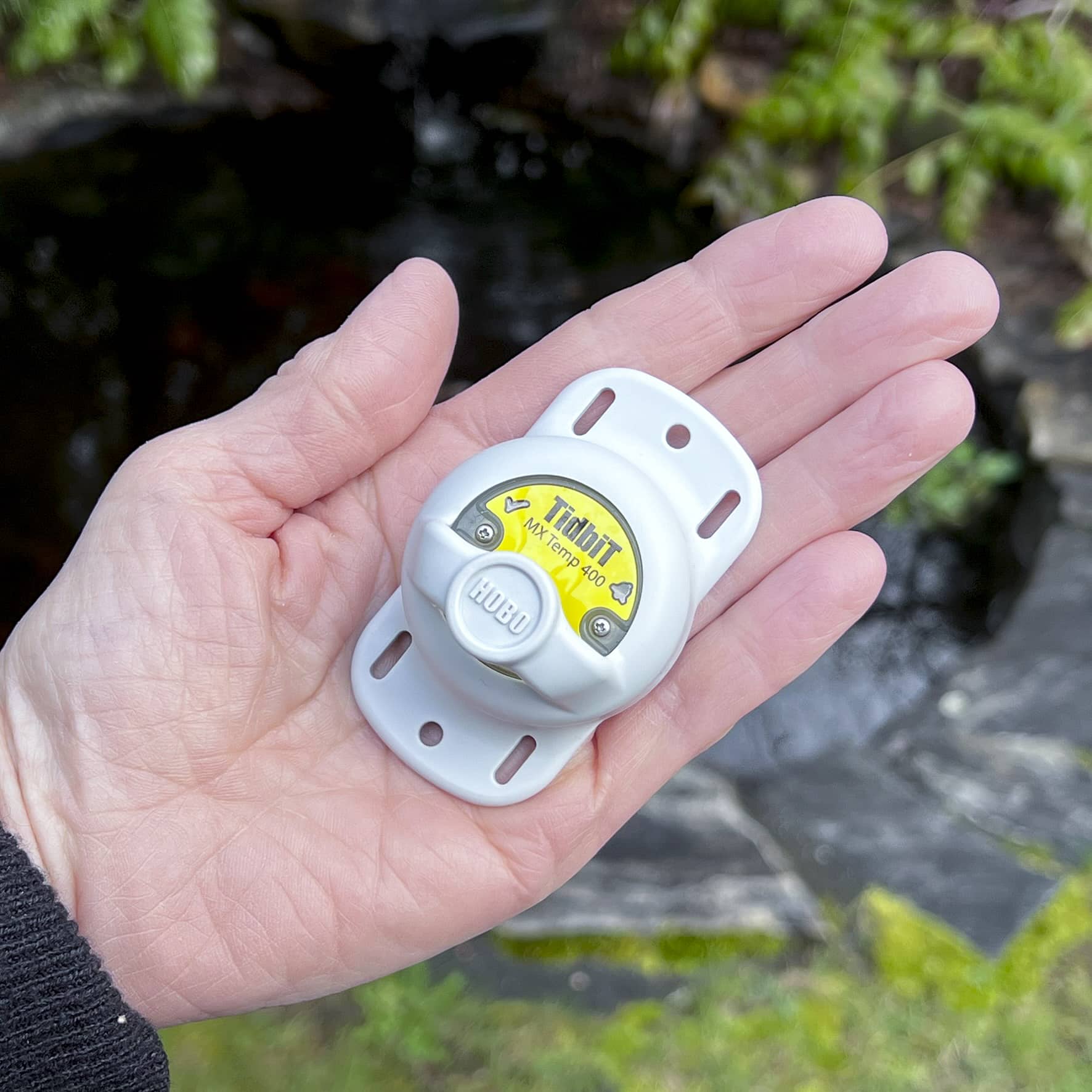
The Tsolum River Restoration society (TRRS) did a study a few years ago that looked for refugia in the Tsolum River. “Refugia” is the term used for pockets of colder water in streams, usually caused by groundwater inflow, where salmon attempt to survive a drought. BWS is collaborating with Pacific Salmon Foundation (PSF) to do a similar study in two of our local creeks (to be chosen later). PSF will supply temperature loggers, quaintly called “TidBits”, and BWS will supply the volunteers to place and maintain the loggers. The data will be shared. PSF’s interest, obviously, is fish health. BWS’s interest is different. We want to learn more about the interconnection between groundwater and streamflow.
The interconnection may not be obvious, but it is important. Water from creeks usually seeps into the ground as it flows on its journey to the sea. But sometimes it goes the other way. That is, groundwater feeds the creek. Typically, this happens in the summer when snowmelt has almost disappeared. Several of our creeks run strong all summer because they are fed by underground springs.
One way to detect this interconnection is by temperature. Groundwater is insulated from warm air and the sunshine of summer. It’s noticeably cooler than creek water. Locating and mapping these areas of groundwater inflow can tell us much about the underlying hydrology.
The data from the PFS and BWS collaboration will be helpful for those concerned with salmon. It will also be helpful for those of us trying to assess the future of our community’s water. By next winter, I should have lots of data to digest which will, hopefully, take my mind off the outside thermometer.